

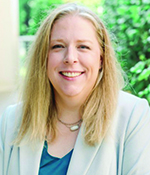
Leslie Schwindel, MD, FAAOS
Published 2/27/2026
|
Leslie Schwindel, MD, FAAOS
New Year's has always been an interesting time for me. We've commonly ascribed a period of rest, relaxation, and the setting of resolutions to this time, with the plan of entering the new year as a better version of ourselves. As I've grown older and (supposedly) wiser, the New Year has revealed to me three universal truths:
- Deductible December is over and case volume will typically decline a bit, giving me a little rest;
- the season of resolutions will cause an influx of overuse injuries for the next four to six weeks; and
- I'm no better than anyone else. As I'm typing this, I have an ice pack on my heel from a trail run earlier today, and my right sacroiliac joint is throbbing from trying to achieve a personal record in my deadlift two days ago. (I feel like a surgeon who loves CrossFit may be a bit of a hypocrite, but I must ensure job security somehow.)
I have fallen into the trap of setting resolutions each year; some I reach, many I don't. But the process has been helpful in transforming my mental and physical health. We live in chaotic times; I think we can all agree on that, but the toll it takes on our mental and physical health, particularly for those of us in the healthcare sector, is often overlooked. Physicians especially are subjected to rigorous daily job demands and are often the last ones to take care of ourselves. We are trained to care for others and frequently deny our own needs. Over time, the chronic exposure to high levels of stress can take its toll, and the effect on physician mental health cannot be overemphasized.
According to a 2025 survey by Medscape, more than one in six physicians have thought about or attempted suicide. Additionally, 38% knew at least one fellow doctor who dealt with suicidal ideation. Another 2025 study published in the Journal of the American Medical Association (JAMA) noted that the rate of suicide in physicians was higher in female physicians. That analysis spanned Jan. 2017 to Dec. 2021, using data from the National Violent Death Reporting System, encompassing 30 states and Washington, D.C. The study identified 448 physician suicides, with 21% being female and 79% male. However, female physicians had a higher suicide incidence per 100,000 person-years compared to the female general population; they faced a 53% increased risk of suicide. In contrast, male physicians exhibited a lower suicide risk than their general population counterparts during the same period.
I can attest to this as being true; my mental health was not in a good place during residency and fellowship training. I was a collegiate athlete from a very small town and moved from medical school in a mid-sized Midwestern city to Chicago, knowing no one within a six-hour radius. I was socially isolated and struggled with seasonal depression. Long work hours, academic demands, and generally high stress did a number on me. I didn't have the tools to cope in healthy ways, and I struggled at times. By the end of training, I had gained a substantial amount of weight and was not in a healthy place.
But the subsequent 10 years have been transformative. Having free time again has helped, and I also began eating healthier, exercising, and learning better ways to manage stress. I bought a Peloton exercise bike and fell in love with spin classes. Next, I bought a hybrid bike and began riding outside ... and my obsession with cycling began. As I logged more miles, I bought a road bike, then followed with my “midlife crisis” purchase of a mountain bike, and lastly another road bike to keep on my indoor smart trainer. (Yes, all of my bikes have names.)
After cycling, I began running again and CrossFit soon followed. I run most of the local 5k races and do hot yoga weekly. I also meditate, journal, and do the other “self-care” activities that we're supposed to do. Yes, they do help me stay grounded, but physical activity specifically has been life changing for me. If I miss a planned day of exercise, I can feel a notable difference in my mood and how I hold stress in my body. I sleep better and my moods are more stable. I've lost 100 pounds and have kept it off for several years. I do have further to go, but I've learned not to focus on the end result but rather embrace the journey. Prioritizing my physical and mental health has made me a better surgeon and a better person.
I'm not encouraging everyone to run out and join CrossFit. (Unless you want to... by all means, it's a good time.) But my point is: We can't work all the time as surgeons. We all need an outlet. Maybe it's spending time with your kids, or a fun new hobby. I love to crochet and do needlepoint. Live music is an obsession for me second only to cycling. Meditation, journaling, pets, therapy — they're all good for us.
In this new year, I encourage you to make a resolution to continue making your patients a top priority but make yourself one as well. We can't pour from an empty cup. Find something that inspires you, makes you happy, or is just good for offloading the stress of work. The state of our healthcare system and our societal/political issues are, for the most part, out of our control. But we can control how we prioritize our time. Check in with one another and let's keep our profession healthy. I think I can speak for us all when I say even one physician lost to suicide is too many, and I want to see us all happy and healthy for years to come.
Leslie Schwindel, MD, FAAOS, is a board-certified general orthopaedic surgeon at Lake Cumberland Regional Hospital in Somerset, Kentucky. She is also a member of the AAOS Now Editorial Board.
References
- McKenna J. Medscape Physicians and Suicide Report 2025: “A Lot More Still Needs to Be Done.” Medscape. Published February 21, 2025. https://www.medscape.com/slideshow/2025-Physician-Suicide-Report. Accessed February 11, 2026.
- Makhija H, Davidson JE, Lee KC, Barnes A, Choflet A, Zisook S. National Incidence of Physician Suicide and Associated Features. JAMA Psychiatry. 2025;82(5):451-458. doi:10.1001/jamapsychiatry.2024.4816
Addtional resources
- Physician Support Line: A nonprofit where American physicians and medical students and talk confidentially with a volunteer psychiatrist.
888-409-0141 - PeerRxMed: Will match physicians with a “buddy” colleague who can provide emotional or professional support.
www.peerrxmed.com/ - A list of state mental health programs for doctors and trainees:
www.fsphp.org/state-programs - 988: National Suicide and Crisis Lifeline