

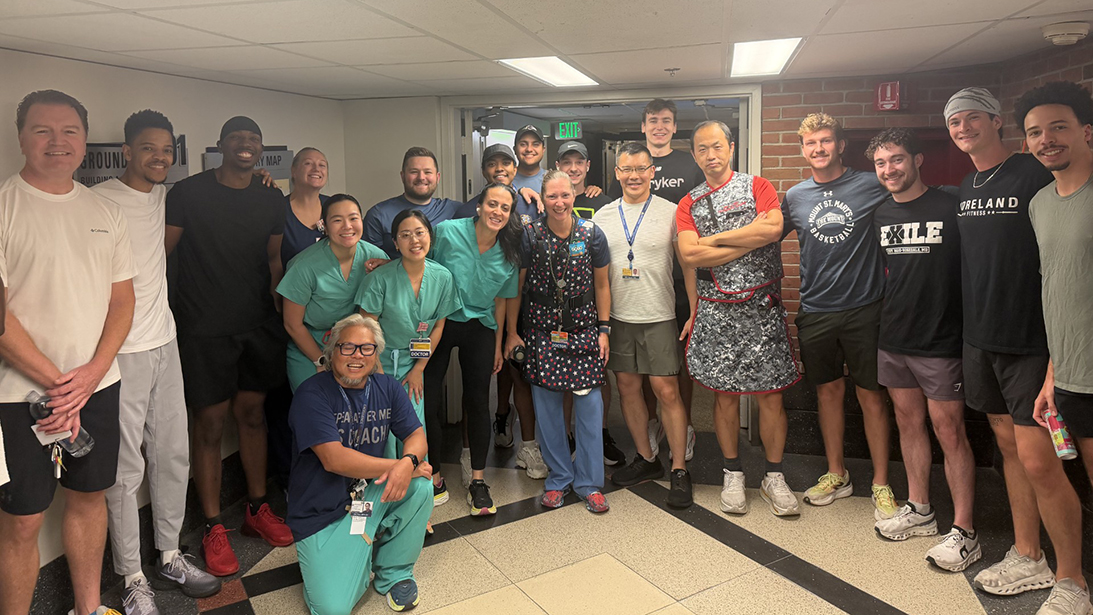
Johns Hopkins Bayview Medical Center orthopaedic team at the 911 stair climb.
Courtesy of Rachel B. Sotsky, MD, FAAOS
Published 10/20/2026
|
Richard A. Schaefer, MD, MPH, FAAOS; Rachel B. Sotsky, MD, FAAOS; James R. Ficke, MD, FAAOS
Editor’s note: “Outside the OR” is a new AAOS Now feature exploring the experiences and pursuits that shape orthopaedic surgeons beyond clinical practice. Through personal stories and unique perspectives, the series offers a glimpse into the lives of surgeons outside the operating room. If you have a story idea for a future installment, contact us at aaosnow@aaos.org
Never forget. On September 11, 2001, nearly 3,000 people died in the attacks on the Twin Towers at the World Trade Center in New York City and the Pentagon and the crash of Flight 93 in Pennsylvania. There were 2,763 victims in the Twin Towers alone. Twenty-five years later, the Johns Hopkins Department of Orthopaedic Surgery remembered that dark day with a tribute to the victims and the first responders. Orthopaedic surgeons, residents, and staff participated in the 9/11 stair climb, an event that takes place every year on that day around the country.
There were an estimated 17,400 people inside the towers when the first plane hit the North building. Of those, 87% were successfully evacuated before the towers collapsed. However, more than 400 firefighters, police officers, and first responders died trying to rescue the others.
The Johns Hopkins orthopaedic surgeons and staff gathered at two hospitals to climb 110 stories, the number of floors at the World Trade Center. Some residents and alumni performed the climb at various locations, including in Korea, Switzerland, and New York City. The event was not a race, a display of athletic prowess, or a competition. Instead, it was a somber reflection and tribute to the sacrifice of those who were lost that day.
Johns Hopkins Bayview Medical Center orthopaedic team at the 911 stair climb.
Courtesy of Rachel B. Sotsky, MD, FAAOS
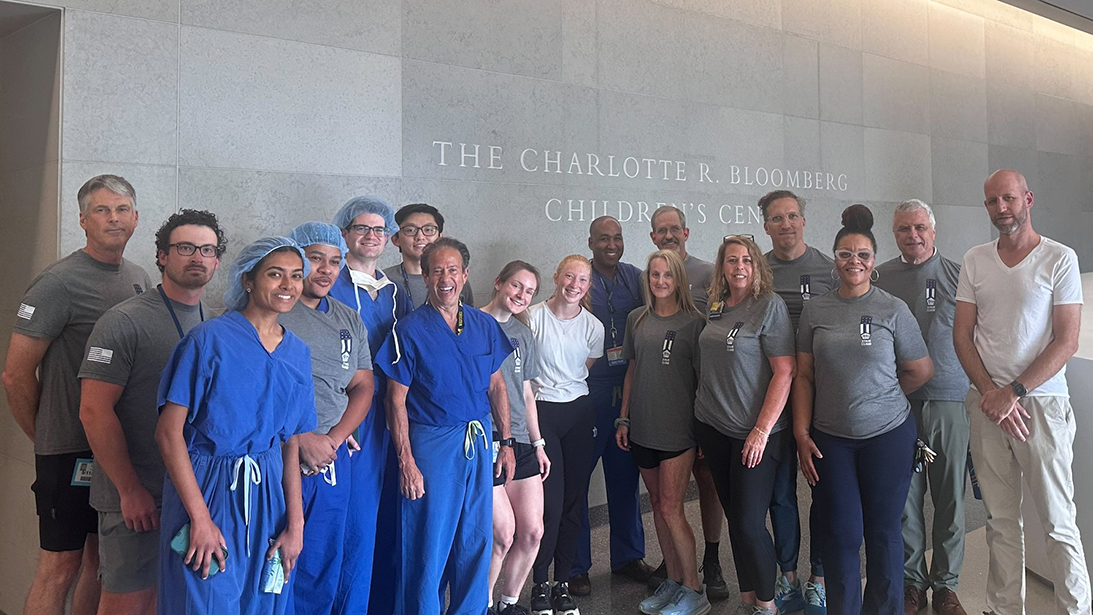
Participants gathered before the climb at Johns Hopkins Hospital.
Courtesy of Richard A. Schaefer, MD, MPH, FAAOS
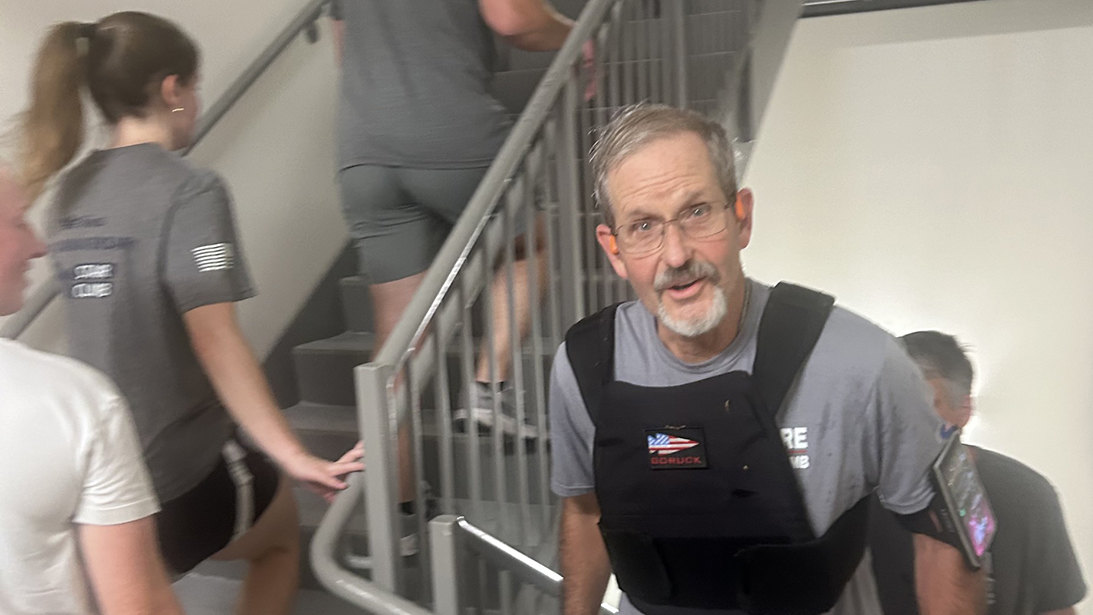
Department Chair James Ficke, MD, FAAOS, and team climb the stairs at Johns Hopkins Hospital.
Courtesy of Richard A. Schaefer, MD, MPH, FAAOS
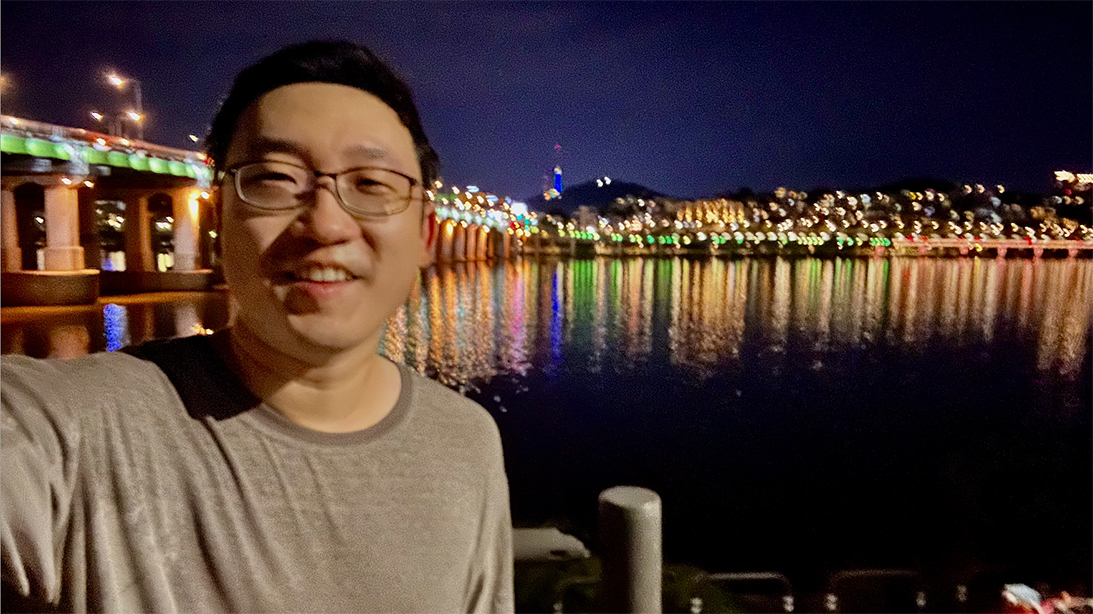
Frederick Mun, MD, completed the climb on a bridge in South Korea.
Courtesy of Frederick Mun, MD
Some participants wore backpacks to symbolize the load carried by firefighters as they climbed the tower stairs after the attack. Others wore surgical lead aprons. As they climbed, the orthopaedic surgeons thought about the lives lost and the heroism displayed that tragic day.
For orthopaedic residents and surgeons, the experience carried an especially meaningful connection to the work we do every day.
“As orthopaedic residents, we spend our days in a hospital where running toward an emergency is routine,” said Myung-Jin Cha, MD, a PGY-2 orthopaedic surgery resident. “On Sept. 11, our program climbed the hospital stairs, up and down, to mark the 110 stories that first responders climbed in 2001 carrying seventy pounds of gear, knowing the tragedy above them.”
That comparison became increasingly tangible as the climb progressed.
“Partway through, I had to stop for a water break. I was in an air-conditioned building, in scrubs, carrying nothing, with no doubt in my mind that I would soon resume my normal day. The first responders had none of that, and they went up anyway,” Dr. Cha said.
Frederick Mun, MD, a PGY-4 orthopaedic surgery resident, was in South Korea for a global health elective rotation on Sept. 11. Nevertheless, he completed the climb on a bridge near the Han River. Dr. Mun described the experience as “a meaningful way to honor the courage and sacrifice of first responders and others who lost their lives on 9/11.” While he participated in the climb from thousands of miles away, Dr. Mun still felt “connected to the solidarity and camaraderie of the department.”
Many climbed the entire 110 floors. Others climbed the amount they could complete safely or before being called away to answer a page or go to the operating room. The surgeons encouraged one another as they climbed. It was a team event dedicated to honoring and remembering those who perished, including the many firefighters and first responders.
Twenty-five years later, we continue to remember. We continue to honor their courage.
Never forget.
Richard A. Schaefer, MD, MPH, FAAOS, is an AAOS Now Editorial Board member and assistant professor of orthopaedic surgery at Johns Hopkins School of Medicine.
Rachel B. Sotsky, MD, FAAOS, is an orthopaedic specialist with expertise in trauma surgery and an assistant professor in the Johns Hopkins Department of Orthopaedic Surgery.
James R. Ficke, MD, FAAOS, is the Robert A. Robinson Professor of Orthopaedic Surgery at the Johns Hopkins School of Medicine and director of the Department of Orthopaedic Surgery. He is also orthopaedist-in-chief of The Johns Hopkins Hospital.