

The 2026 AAOS Resident Education Forum will take place Thursday from 11:30 a.m. to 12:30 p.m. in Room R04.
Published 3/5/2026
Space medicine is a rapidly evolving field of healthcare, and orthopaedic surgery plays a pivotal role within it. A session led by Aenor Sawyer, MD, MS, at the 2026 AAOS Resident Education Forum on Thursday will highlight the interdisciplinary collaboration at the intersection of surgery, physiology, and aerospace medicine.
As spaceflight expands from short missions to longer exploration efforts, and as interest in commercial and touristic space travel increases, musculoskeletal health has become essential to astronaut safety, function, and long-term outcomes. Orthopaedic surgeons are uniquely situated to contribute by applying expertise in bone and joint physiology, biomechanics, rehabilitation, and injury prevention in extreme environments.
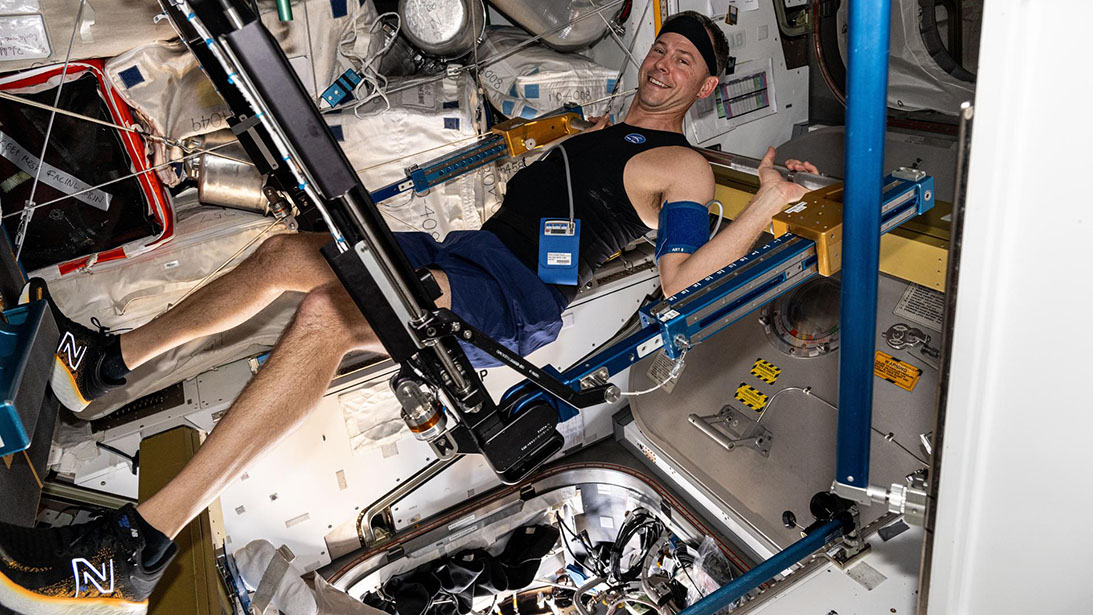
Microgravity produces major changes in the musculoskeletal system. Without normal mechanical loading, astronauts experience rapid bone mineral density loss, often around 1-2% per month at weight-bearing bones. Similarly, microarchitecture and overall biomechanical strength are also impacted. Although partial recovery occurs after returning to Earth, complete restoration may not occur after longer missions. These findings raise concerns about fracture risk, implant fixation, and long-term skeletal health in both astronauts and future civilian space travelers.
Muscle, tendon, and enthesis structures are similarly impacted. Microgravity leads to significant muscle atrophy, with measurable losses in strength that may exceed the degree of muscle volume reduction. Tendons and entheses undergo unloading-related changes that decrease stiffness and alter collagen organization. These adaptations may increase the risk of injury during extravehicular activities or during re-exposure to gravity. Upper extremity problems involving the shoulder, elbow, and hand are especially common because astronauts rely heavily on arm-based movement and task performance in space.
Joint and spine health also present challenges. Articular cartilage is sensitive to unloading, and microgravity-related changes may resemble early osteoarthritic patterns. The spine elongates in microgravity, with disc hyperhydration and paraspinal muscle changes contributing to space adaptation back pain and an increased risk of disc herniation after flight. These effects highlight the importance of spinal biomechanics, rehabilitation planning, and injury prevention both during and after missions.
Space medicine also has relevance beyond aerospace care. Spaceflight research provides valuable models for osteoporosis, fracture healing, tendon adaptation, cartilage biology, and spine conditions on Earth.
At the same time, advances in orthopaedic surgery, including robotics, wearable monitoring, regenerative strategies, and telemedicine, support future medical care in space environments.
Learn more at the 2026 AAOS Resident Education Forum, Thursday from 11:30 a.m. to 12:30 p.m., Room R04, where Dr. Sawyer will bring together orthopaedic and space-medicine perspectives to explore how microgravity challenges traditional assumptions in musculoskeletal care, how orthopaedic surgeons can shape future standards for astronauts and space tourists, and how spaceflight research can drive innovation across orthopaedic subspecialties.