

Abstracts & Applications
Call for Abstracts and Applications Is Now Open
Abstract and application submissions are now open. Share your discoveries, research, and ideas with a global orthopaedic audience in Las Vegas, March 3–6, 2027.

Kickstart Your AAOS 2027 Abstract or Application
AAOS 2027 Key Dates to Know
When planning your AAOS 2027 Annual Meeting participation and submissions, note these key deadlines and meeting dates:-
May 1, 2026
ICL, Showdown, Symposium, and The Way I See It… (TWISI) Applications Due
-
June 1, 2026
Paper, Poster, and ePoster Abstract Applications Due
-
July 15, 2026
Orthopaedic Video Theater (OVT) Plus Video Applications Due
-
Aug. 31, 2026
OrthoDome Video Applications Due
-
Sept. to
Oct. 2026Accept Notifications Sent
-
Nov. 2026
AAOS 2027 Annual Meeting Registration Opens
-
March 3-6
(Monday to
Friday)AAOS 2027 Annual Meeting in Las Vegas
AAOS 2027 Call for Abstracts References
- 2027 Paper/Poster/ePoster Application Guidelines
- 2027 Paper/Poster/ePoster Abstract FAQ
- 2027 OrthoDome Submission Requirements
- Search 2026 Education Program
Other AAOS Publication Deadlines
Learn about Journal of the American Academy of Orthopaedic Surgeons (JAAOS) call for research papers and case reports:
Explore Available Learning Formats
Learn more about each available education format.
-

This small, roundtable format consists of one moderator and ten knowledgeable faculty facilitators. Four to eight cases are discussed per course. After each case is presented by the moderator, faculty members facilitate discussion at their tables and aid in formulating a treatment plan. Each table then presents their proposed solution. Finally, the moderator presents the actual treatment and outcomes using evidence-based data including teaching points and references to support the selected treatment. This application must list a moderator and 10 orthopaedic faculty table facilitators at the time of submission. 11 total is the maximum faculty limit.
-

Comprised of didactic lectures and audience discussion, ICLs represent the tried and true in orthopaedics. ICLs present accepted principles and techniques, evidence-based practices, and often include pearls and pitfalls of procedures. ICLs are limited to three faculty members and a moderator. Four total is the maximum faculty limit.
-

Comprised of specialty-specific sessions, OrthoDome presentations are 7–12-minute HD or 4K videos of innovative orthopaedic surgical techniques. Videos are narrated live by presenters and are followed by short Q&A sessions. OrthoDome is a non-CME session and is included with Annual Meeting registration. Applications are for individual presentations, and low-resolution versions of the video are due at the time of application.
-

OVT video submissions undergo an extensive peer review by experts in the specialty area. Acceptance into the collection comes with benefits, including presentation at the Annual Meeting, opportunity for award-winning designation, video abstract inclusion in JAAOS, and availability to include the published video on your C.V.
-

There is one application for Papers, Posters, and ePosters. On the application, you may select your preferred format. The Program Committee will take your preference into consideration, but your preferred format is not guaranteed.
- Papers are live, 4-minute podium presentations accompanied by a slide deck.
- Posters are physical posters that will be displayed during the meeting. Presenters are required to attend the meeting and stand with their poster during designated times to participate in discussion with the audience. A 45-inch by 45-inch tackboard will be provided for your use. If your abstract is accepted as a poster, you will also be required to submit an ePoster version.
- ePosters will be displayed at ePoster stations at the meeting, as well as online. Attendees will be able to search for and view ePosters at their leisure. There is no formal presentation aspect to ePosters, and attendance at the meeting is not required.
-

These one-hour sessions consist of engaging point/counterpoint debates on techniques and/or controversial procedures. Up to four faculty members will debate each other, either one-on-one or two-on-two. The Moderator will engage the learners, ask questions, and mediate the debate(s). Attendees vote for who they believe won the debate(s) using an audience response system (ARS).
-

Designed for topics that challenge convention or introduce novel perspectives, Symposia present cutting edge, controversial and innovative topics. Symposia topics should be well balanced and feature a blend of differing styles, techniques, or management, as well as a diverse faculty. Symposia may be formatted as a series of didactic lectures, but a debate-style format also works well. Symposia should have a minimum of three speakers, maximum of 13, including the moderator. A minimum of 15 minutes should be left at the end for questions and answers.
-
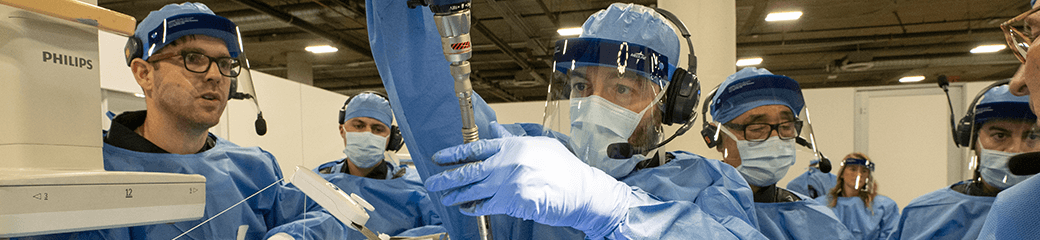
A Technical Skills ICL features a 10-minute video on positioning, approach, and step-by-step technical techniques, followed by a 10-minute discussion of pearls. Four to five topics per session are suggested. This type of course works well with unique procedures (i.e., nail tibia) or by breaking down a more complex operation (Revision TKA) into multiple topics. The faculty must be committed to preparing a high-quality fully edited 10-minute video, supplemented with slides as necessary. The video will be provided as a handout to attendees and is due by the handout deadline if the application is accepted. Technical Skills ICLs are limited to three faculty and one moderator.
-

Faculty provide candid opinions, just the way they see it, on contemporary, controversial and top-of-mind issues in Orthopaedics in these one-hour sessions.

Claim Your AAOS 2026 CME Credits
Explore the learning objectives behind AAOS Annual Meeting education and see how sessions are structured to help you expand your knowledge and earn CME credit. If you attended AAOS 2026, you can now claim your CME credit.