
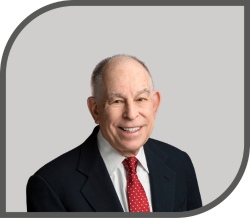
Malcolm L. Ecker, MD, FAAOS
Attending Orthopaedic Surgeon
The Children’s Hospital of Philadelphia
Emeritus Associate Professor of Orthopaedic Surgery
The Perelman School of Medicine at The University of Pennsylvania
Philadelphia, PA
Member Since: 1973
What was your work practice and location?
I was a solo orthopaedist in the Philadelphia area since 1969, doing a full spectrum of adult problems and about 30% children. In 1975, I started the Scoliosis Clinic at the Children’s Hospital. Around 1998, I became a full-time member of the University of Pennsylvania faculty practice. After 2006, when I stopped doing surgery, I only saw outpatients at the Children’s Hospital of Philadelphia and was a member of the Orthopaedics Division practice.
In my training years, a year of general surgery was required before an orthopaedic residency. After my year of general surgery, I was the only general surgeon for two years at Plattsburgh Air Force Base Hospital, taking care of 18,000 military and dependents, doing all the orthopedics, urology, etc. Eventually, we acquired an orthopaedist who had just finished his residency.
Residents and practitioners generally saw the full gamut of problems and only in later years did sub-specialization develop. During my training at the Hospital for Special Surgery, the attending did a full spectrum of problems and I remember Alan Inglis, a member of the hand service, doing a beautiful disc excision. I was the hand fellow for six months. I did my first total hip in 1968, which revolutionized our approach. I was a charter member of the Association of Arthritic Hip and Knee Surgeons and am an Emeritus member of the Scoliosis Research Society. My publication list represents the diversity of my practice.
If you were mentoring a new member, what important advice would you give them as they progress in their career?
I try to remind young orthopaedists that they are first and foremost a physician, not a technician treating a fracture or other problem. Listen to the patient, do a good physical examination, and only then order or look at images and other studies. Consider how the proposed treatment changes the natural history of the entity. Fortunately, publication statistics are much better at this. Remember that fractures do heal without metal. We always have the opportunity to make things worse, and the risks should justify the possible benefits.
“Striving to better, oft we mar what’s well.”/ King Lear, William Shakespeare, Act 1, Scene 4.
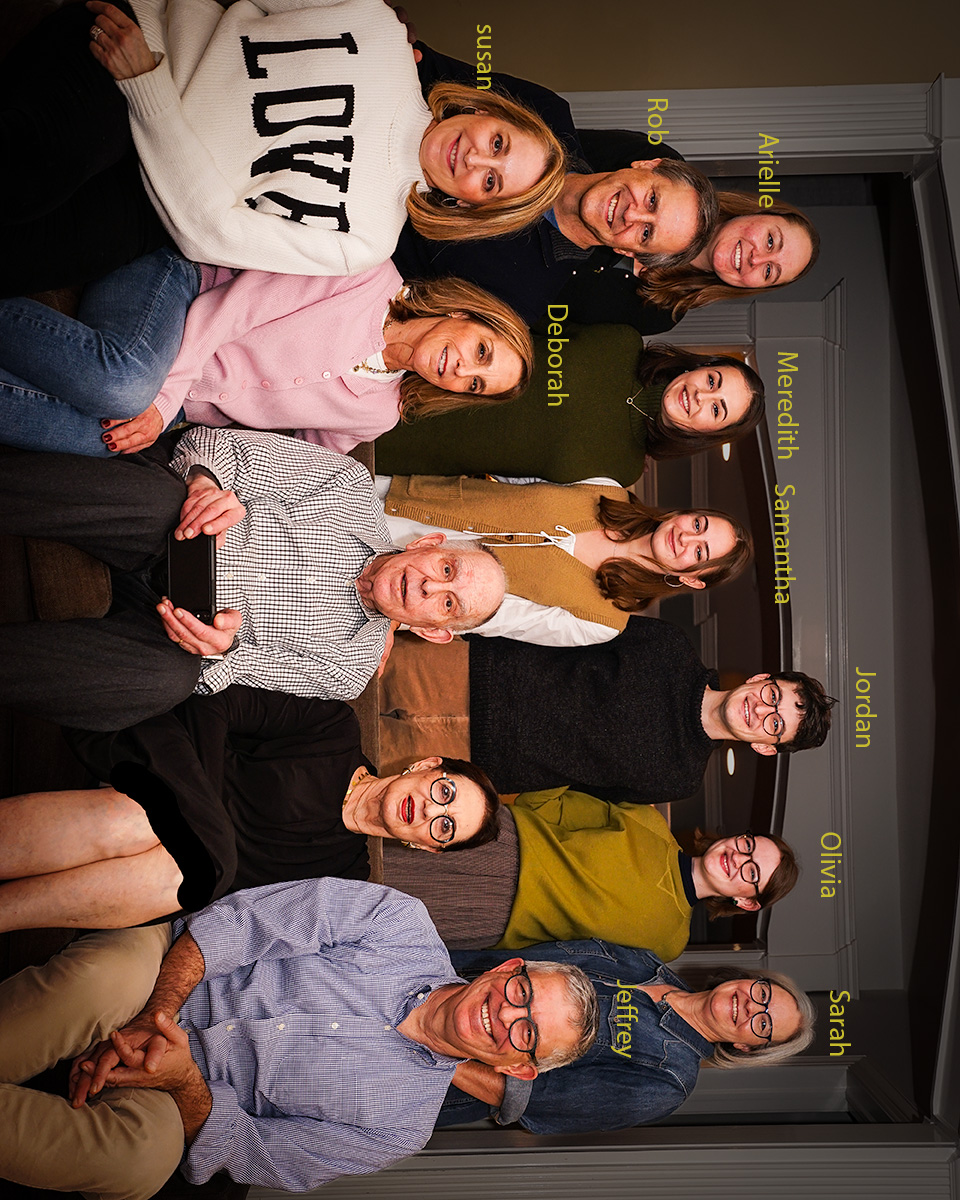
Orthopaedists should try to achieve a good work/family balance. Put your children’s events/games in your office calendar. I have been blessed to be close to celebrating my 66th wedding anniversary. We have 3 children and 5 grandchildren, all of whom are productive. Most importantly, they are nice to other people and do not feel entitled.
Orthopaedists should get their satisfaction from the gratitude of patients, not from the size of their house or the cost of their car or boat.
What aspect of retirement surprised you the most?
The biggest change occurred when I stopped doing surgery. Any surgeon who is honest will tell you that they did not appreciate their level of anxiety until they stopped. Suddenly, one sleeps better. Unfortunately, you also lose the ego boosting of admiring the post-op results/X-rays of what you accomplished with your hands.
What hobbies do you enjoy in your spare time?
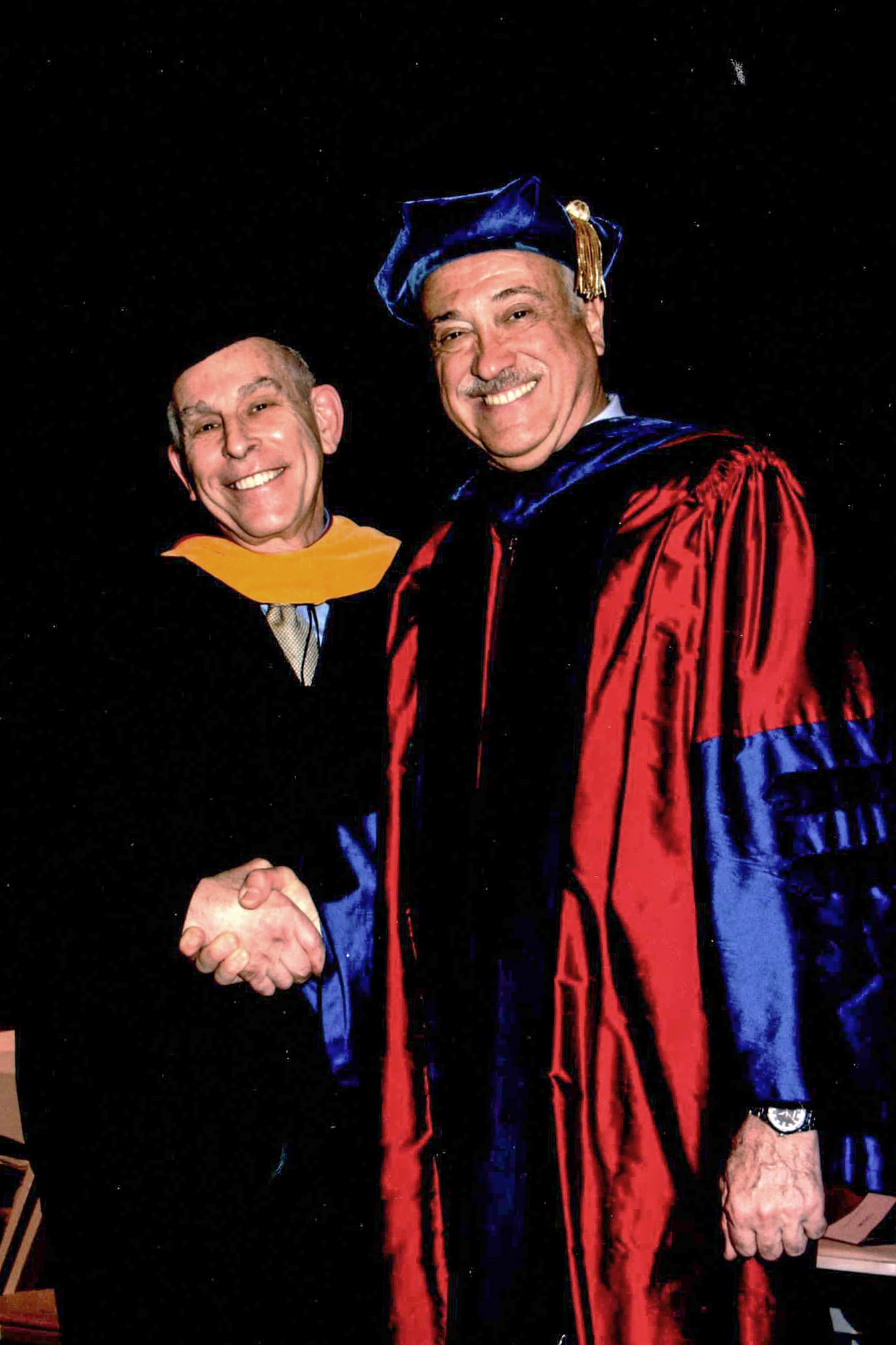
When I first stopped doing surgery, the question arose about what to do with my time. Knowing nothing about the growing importance of computers (just as the PC was arising), I took an introduction to computer science at a local community college, some coding courses at Drexel University, and eventually a Master’s in Computer and Information Technology from the University of Pennsylvania (graduation photo above). Studying for and taking the GRE was an interesting experience.
I have only been retired for two months and our move to a Continuing Care Community has occupied most of my time. I continue to be curious about many things and enjoy duplicate bridge, although since COVID, this is largely online. Unfortunately, physical limitations prevent my previous activities of bicycling trips in Europe and bare boat sailing in the Virgin Islands. I continue my photography interest, which is digital, not in the darkroom.
Tell us a fun fact about yourself that not many people know.
I was a varsity fencer in college.