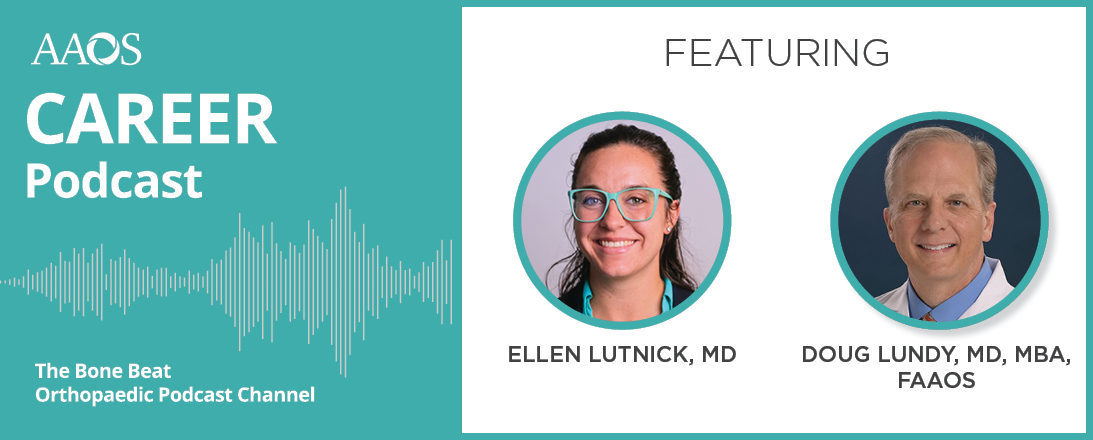
This episode examines the potential benefits and pitfalls of early subspecialization in orthopaedic residency training. AAOS Now deputy editor Doug Lundy, MD, MBA, FAAOS, of St. Luke's University Hospital in Bethlehem, Penn., joins host Ellen Lutnick, MD, chair of the AAAOS Resident Assembly Executive Committee, to explore where the line falls between a helpful early interest and a narrowing of focus that limits a resident's growth.
Drs. Lutnick and Lundy discusses the importance of generalized training for board certification, the value of learning about multiple subspecialties throughout training, and why the PGY-3 year is often the sweet spot for identifying a subspecialty direction.
Dr. Lundy emphasizes that the quality fellowship directors seek most is a teachable spirit — the willingness to learn rather than a demonstration of what a resident already knows. He also addresses the potential inequities early subspecialization can create within a program, the growing trend of dual fellowships, and which skills every resident should seek to take away from their training. Listeners gain candid, practical advice on navigating subspecialty decisions without limiting future opportunities.
Guest: Doug Lundy, MD, MBA, FAAOS, Chairman, Department of Orthopaedic Surgery and Senior Vice President of Medical Services, St. Luke's University Health Network; AAOS Now Deputy Editor and AAOS Now Podcast host
Host: Ellen Lutnick, MD, AAOS Resident Assembly Executive Committee Chair
More Ways To Get This Episode
Listen on Apple Podcasts, Spotify or Amazon Music.
Catch more episodes from the Bone Beat Orthopaedic Podcast Channel, and be sure to subscribe so you will receive updates when new episodes are released. If you enjoy the content and find the conversations valuable, please rate the show or leave a review.